Hi, it’s Tom here!
This time, I took a three-day, two-night trip to Kagoshima, the gateway to southern Kyushu.
From the majestic presence of Sakurajima volcano, to historical sites connected to Saigo Takamori, and local culinary treasures like black pork, shochu, and shaved ice known as “Shirokuma,” Kagoshima is a city where nature, history, and food come together in perfect harmony.
From the moment I landed at the airport and was greeted by a surprising ashiyu (footbath), to enjoying deep-sea fish dishes loved by locals, the journey was full of unexpected delights. On the second day, I explored Tenmonkan, savored black pork cutlets, admired stunning views of Sakurajima, and walked through sites steeped in history. The evening was spent enjoying local cuisine over a glass of shochu, chatting with fellow travelers. And finally, I wrapped up my trip with a chilly bowl of Shirokuma shaved ice—a Kagoshima classic.
Though short, this three-day journey left me with a heart full of memories. Let me walk you through it, day by day.
Day 1: A Warm Welcome—Airport Footbath and Deep-Sea Delights
Landing in Kagoshima
I arrived at Kagoshima Airport in the evening, and as I stepped outside, I was met with something I didn’t expect—a footbath! Apparently, it’s the first hot spring footbath ever installed at a domestic airport in Japan. It’s called “Oyatosa,” a local dialect phrase meaning “Thank you for your hard work.”
Unfortunately, the footbath was closed by the time I arrived due to a flight delay, but what a unique idea! It felt like a warm welcome after a long journey.
From the airport, I took a limousine bus to central Kagoshima—about a 40-minute ride, no reservation needed.
Deep-Sea Cuisine at “Me Kara Uroko”
After checking into my hotel, I headed straight to a local favorite: “Me Kara Uroko,” a restaurant known for its deep-sea fish cuisine. The place was buzzing, filled with both locals and travelers enjoying a lively meal.
I started with a glass of imo shochu (sweet potato spirit), specifically “Manzen Kurokoji,” served maewari style—meaning it had been pre-mixed with water and left to mellow, resulting in a smooth, rounded flavor. It went down softly, leaving a sweet, roasted aftertaste.
As for food, I ordered nanban-style marinated kibinago (silver-stripe round herring) and deep-fried mehikari (greeneyes). The tart marinade paired perfectly with the umami of the tiny fish, and the mehikari had a crispy exterior with tender flesh that burst with ocean flavor in every bite.
The friendly staff made the experience even more enjoyable. A traveler from Osaka sitting nearby chuckled and said, “It’s my first time here, but I’ve already booked my next visit.”
Kagoshima’s warmth and surprises began from the very first night.
Day 2: Tenmonkan, Sakurajima, and Walking with History
A Stroll Through Tenmonkan
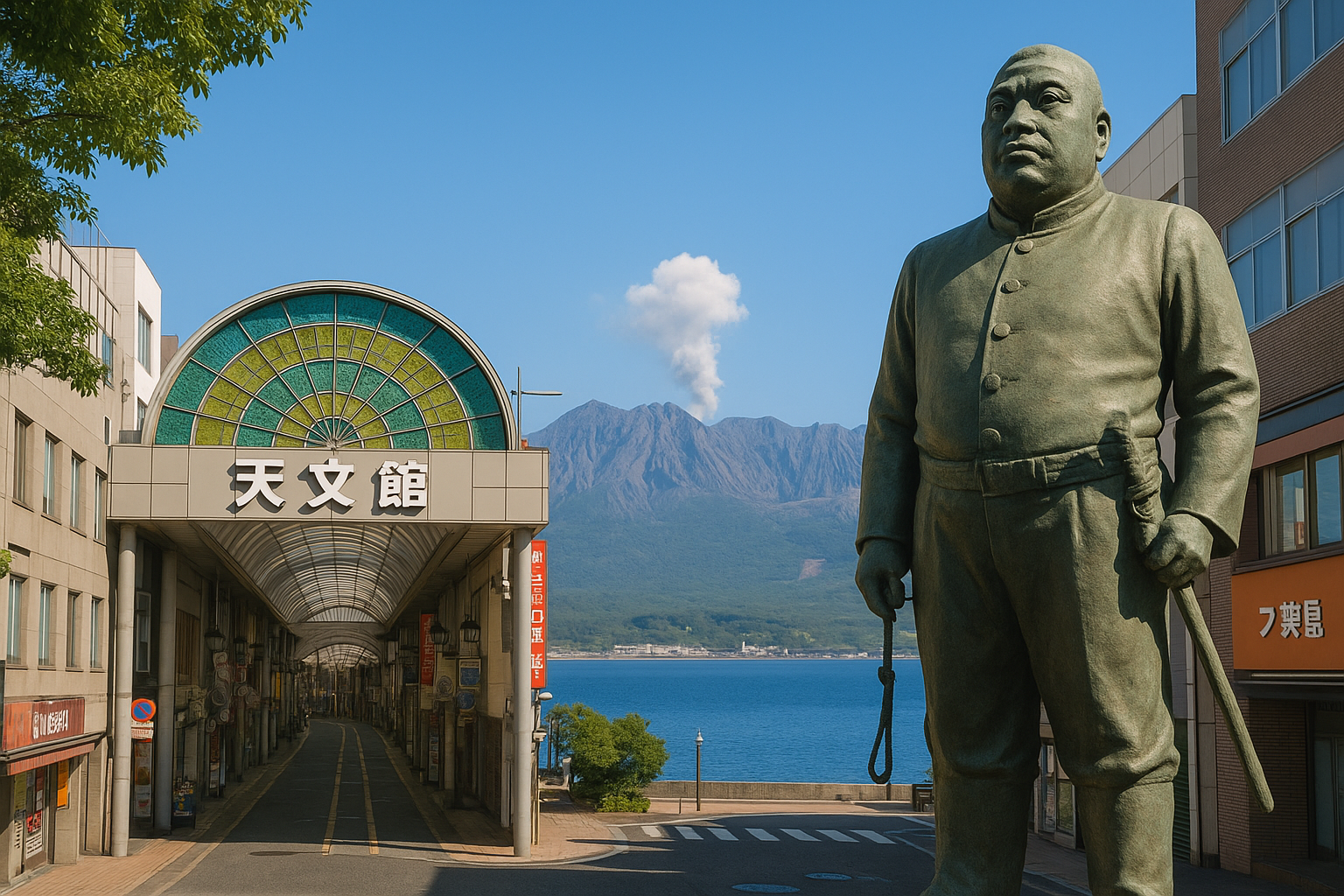
The morning started with a walk through Tenmonkan, the city’s bustling downtown area named after an Edo-period observatory. The covered arcade is lined with cafes and eateries, where locals go about their day alongside curious tourists.
I paused at a statue of Toshimichi Okubo—one of the architects of the Meiji Restoration alongside Saigo Takamori. His calm expression seemed to quietly watch over the city.
Black Pork Cutlet at “Ajimori”
For lunch, I went to the legendary black pork restaurant “Ajimori” and ordered the “Black Pork Special Mixed Cutlet Set,” which included loin, fillet, and belly cuts all on one plate.
The loin had a crispy coating that gave way to sweet, delicate fat that melted in the mouth. The fillet was tender and juicy, while the belly delivered an intense, savory flavor. Each cut offered a unique expression of Kagoshima’s black pork, and honestly, this dish alone was worth the trip.
A Short Ferry Ride to Sakurajima
In the afternoon, I boarded the Sakurajima Ferry from Kagoshima Port. It’s just a 15-minute ride, but stepping out onto the deck, the sea breeze in your face and the slowly looming volcano ahead—it feels like the start of an adventure.
You can bring your car aboard if you’re driving. The island’s perimeter is about 36 km, and you can drive around it in an hour. The ever-changing landscape—lava fields, buried torii gates, hot spring villages—reveals a life lived in harmony with volcanic nature.
Exploring by Island Bus
I used the “Sakurajima Island View” sightseeing bus, which offers a one-day pass and loops around the main attractions on the island’s western side. It’s perfect for travelers without a car. Just gazing out the window, the scale of Sakurajima starts to sink in.
Murayama Pottery — Vessels Infused with Volcano’s Breath
I stopped by “Murayama Pottery,” where they create unique ceramic ware using volcanic ash and lava. The deep blend of red and black gave the pottery an elemental feel, as if nature itself had been sealed within.
Though the shop was quiet at first, a cheerful staff member soon welcomed me and explained the process in detail. I bought a lava-fired plate that now sits on my dining table, reminding me of this journey every time I use it.
Awe and Awareness — Nature’s Power
From the bus, I spotted the dry riverbed of “Mizunashi River,” where mudslides from past eruptions had wiped away the water, leaving behind massive rocks. It was a solemn reminder of how deeply nature shapes human life.
At last, we reached “Yunohira Observatory,” the highest point accessible to the public at 373 meters above sea level. The black, craggy slopes of the volcano loomed close, pulsing with life. Below, the city of Kagoshima and Kinko Bay stretched out in silence. I was speechless.
Tracing the Legacy of Saigo Takamori
As evening fell, I set off to visit key sites related to Saigo Takamori—the heart of this trip.
First was the site where he ended his life at the close of the Satsuma Rebellion. Standing before the monument, I could feel the weight of history.
Walking along the “Path of History and Culture,” I saw stone steps still scarred with bullet holes—evidence of the fierce final battles. I was just a tourist, but standing there made me reflect on the people who had fought and died here. It made me stand a little straighter.
Passing through the ruins of Kagoshima Castle, I visited the Reimeikan Museum, where I learned how education and the “Gojū” system helped produce many historical figures from Satsuma.
And finally, I arrived at the statue of Saigo Takamori himself. Standing tall, dignified, and noble, he watched over the city still. The words “Revere Heaven, Love People” etched nearby reminded me that his spirit remains alive in Kagoshima.
Evening Flavors: Satsuma Cuisine at “Shaza” and Late-Night Ramen
Dinner was at “Satsuma Shunsai Shaza,” where I tried a shochu called “Komatsu Tatewaki from Kaseda.” It had a gentle sweetness and a deep aroma that soothed the soul.
The tataki of Chiran chicken was bursting with flavor, and the local satsuma-age (fried fish cake) was fluffy and mildly sweet. Paired with shochu, the dishes elevated the night beautifully.
I finished the evening at “Ramen Kogin-Tai,” a local favorite with a long line. Honestly, the ramen wasn’t exactly to my taste—but as I chatted with a fellow solo traveler seated beside me, we shared laughs and tips about Kagoshima. That conversation made the bowl memorable in a way no flavor could.
Sometimes, it’s the people that make the meal.
Day 3: Cooling Down with Shirokuma
To wrap up the trip, I headed to “Tenmonkan Mujyaki,” the birthplace of the famous Shirokuma shaved ice. When I arrived, the line was already out the door—so I opted for takeout instead.
You might expect a fluffy mountain of ice, but the takeout version is surprisingly firm—my spoon made a loud crack as it hit the ice.
Topped with plenty of condensed milk, colorful fruits, kanten jelly, and sweet red beans, it looked like a frozen jewel box. Thanks to the dense ice, it held up well even in the heat, staying cool and satisfying till the last bite.
Each spoonful was different—first creamy, then tangy, then subtly sweet. Even as I stared at the massive bowl thinking, “There’s no way I’ll finish this,” my spoon just kept going. Now I see why locals have loved it for so long.
According to the official website of Tenmonkan Mujyaki, here’s how to best enjoy their cup-style Shirokuma:
“Take it out of the freezer and let it sit at room temperature for about 10–20 minutes before eating, or soften it in the microwave (500W)—for less than 1 minute for the Large Shirokuma and within 20 seconds for the Baby Shirokuma.
Mix the top and bottom layers as you eat for an even more delicious taste.”
Source: https://mujyaki.co.jp/cms/ques/detail/ques_id/6
Recommended Souvenirs & Treats
- Black Pork Char Siu: A must-try Kagoshima delicacy. Ajimori sells take-home versions too.
- Karukan Manju: Steamed buns made with yam flour and sweet bean paste—fluffy and gentle.
- Local Shochu: Try Manzen or Komatsu Tatewaki—each bottle tells a story.
Final Thoughts: Drunk on Shochu and History
Kagoshima gave me beauty, history, and flavor all in one unforgettable trip.
Walking where Saigo Takamori once stood made me feel like history isn’t just in the past—it’s still alive, breathing in the present. Even a single sip of local shochu seemed to carry the essence of the land and its people.
On the plane home, one thought filled my mind:
“Next time, I want to visit the shochu distilleries.”
Kagoshima has a way of calling you back. And I think I’ll be answering that call soon.
Until the next adventure—cheers!